

REPORT FROM TENERIFE
all things physical, educational, spiritual, political, agricultural, scientific

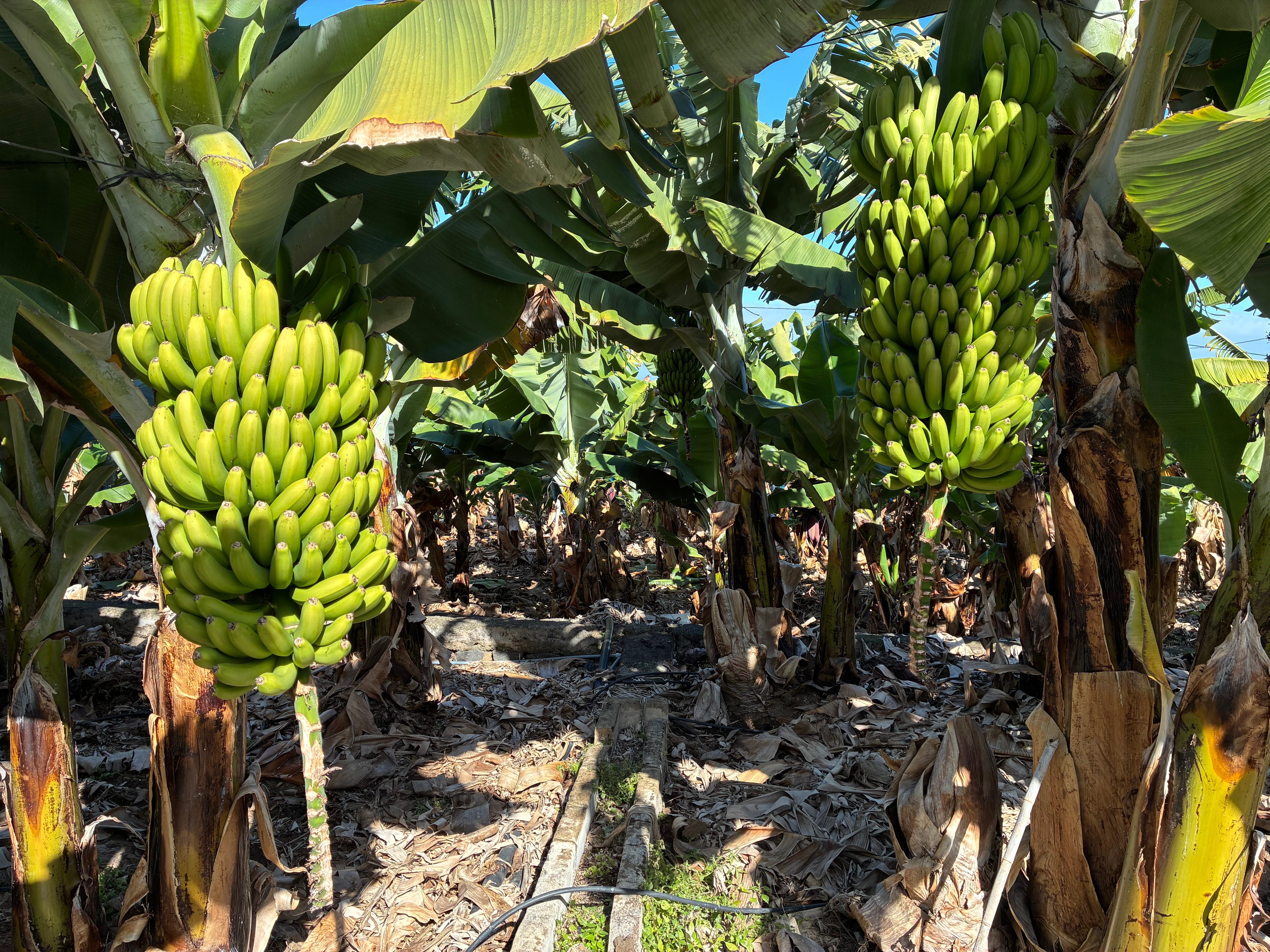
My accommodations were in the middle of a banana plantation. They put a blue bag around bananas like these when they’re nearly ripe. Bananas are one of the few fruits that grow upwards.
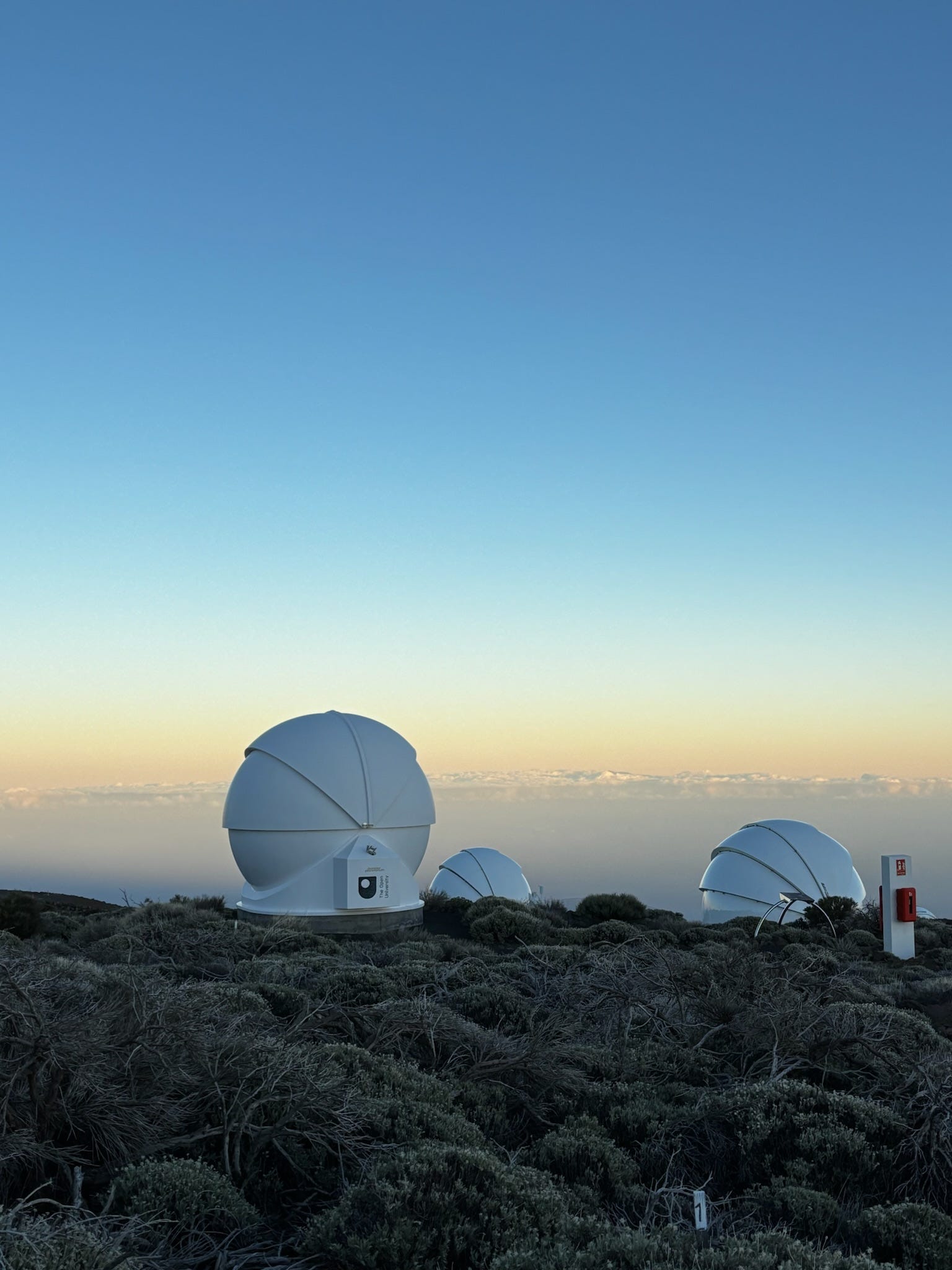
Tenerife is one of the world’s most important astrophysical observation sites and a colleague of my friend is an astrophysicist and showed us around. His interest was mainly in Red Giants, but the most interesting thing for me was seeing the telescope below, completely robotic, that is part of a network of observer telescopes that make sure any moving objects of interest in the sky (meteors, comets, etc.) are followed through all time zones, each passing off to the next as darkness comes and goes. We were told, sternly, “Don’t touch anything. inside”
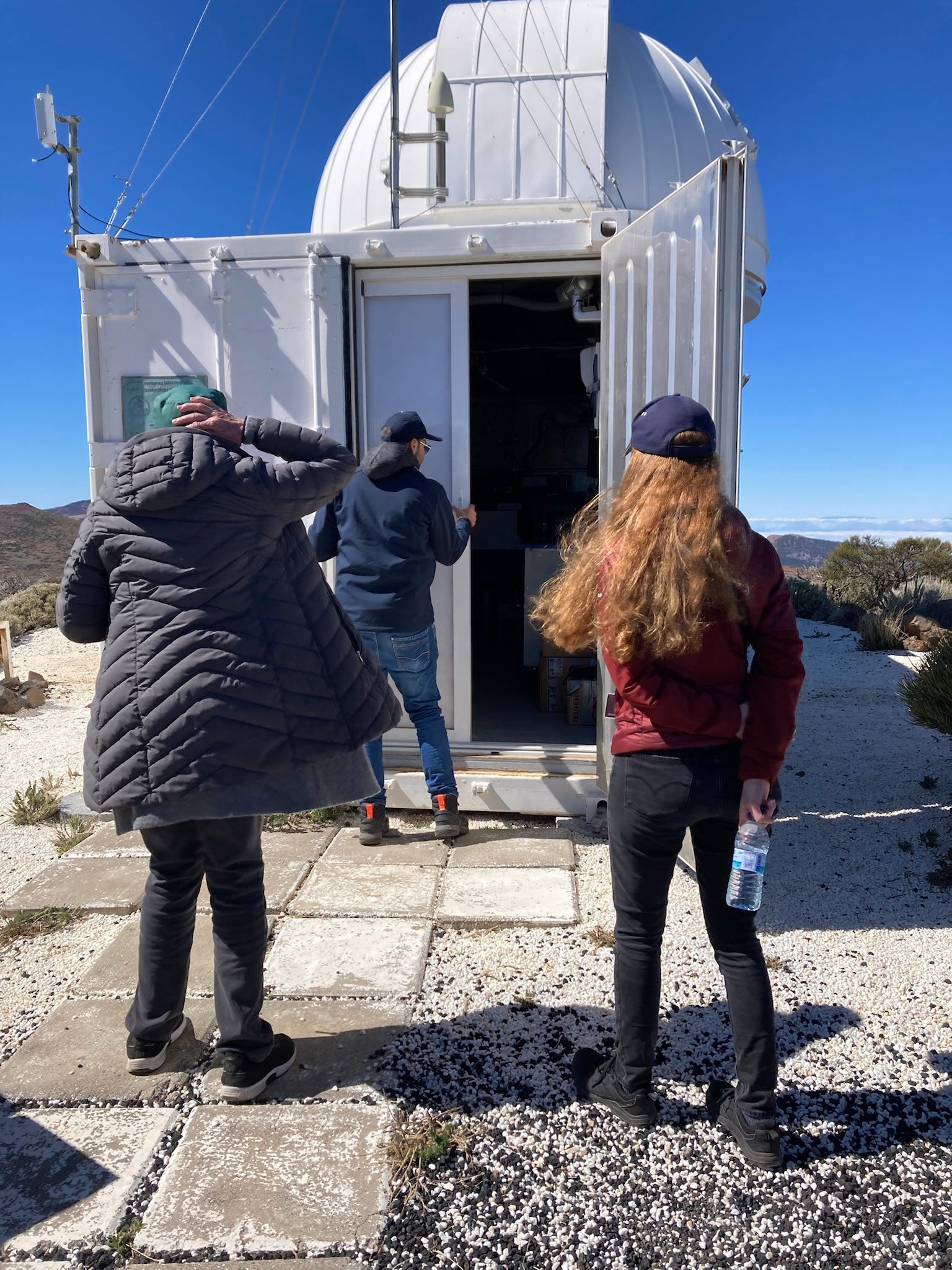
This particular telescope is Danish, one of the first on site. Our astrophysicist guide said, “It’s ours,” with a sense of pride. “Who is ‘us’?” I asked. “The Europeans,” he said. This and many other comments illustrated a burgeoning sense of pride on the part of Europeans who no longer feel they have to labor in the shadow of the United States. They move freely from one country to another, building on each other’s educational systems, tourist industries, building also on a new cultural heritage.
There was also a sprinkling of stories of tourists grossly treated by American border authorities, enough such stories to sour most Europeans I spoke to about coming here. We are doing damage that will take decades to undo.
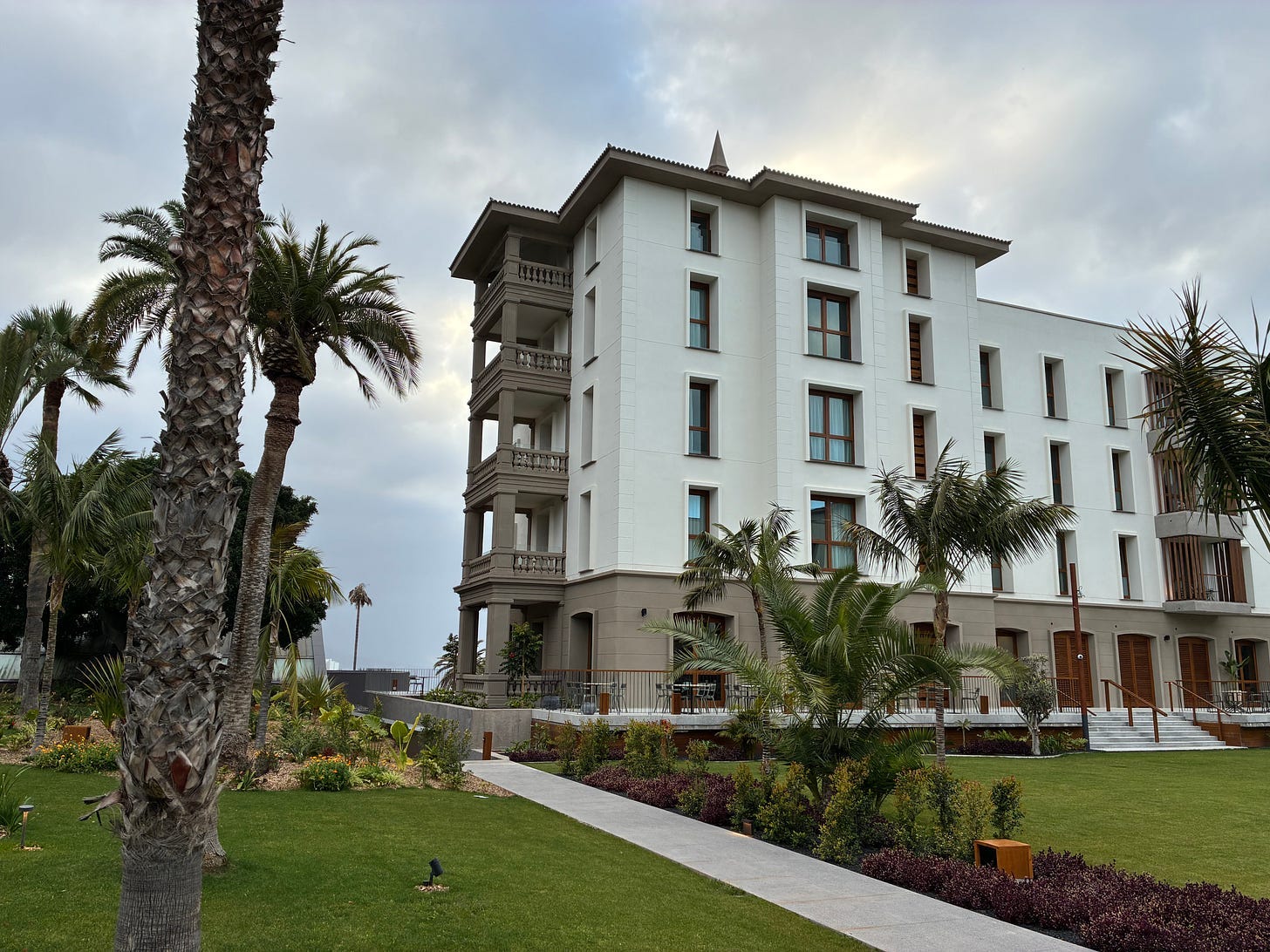
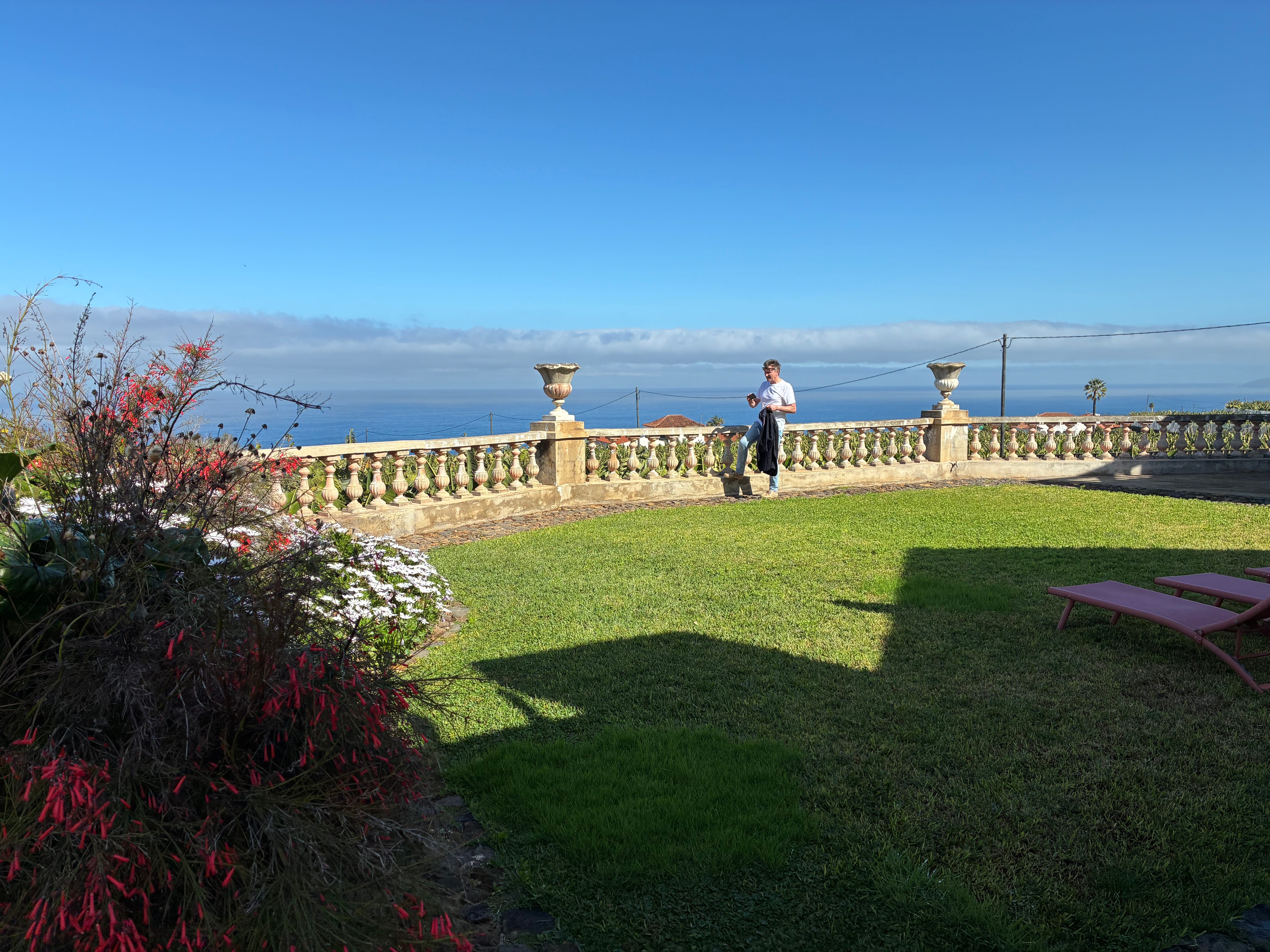
This is the elegant Hotel Taoro high on one of the many steep hills of Tenerife, a volcanic island. The hotel was a haven for Agatha Christie and other well-placed English persons of her time. She escaped here to heal after the death of her mother and after finding out her husband was cheating on her. The place inspired some of her books.
Here is a quote from one: “Mr. Satterthwaite went on, past the palm trees and the straggling white houses, past the black lava beach where the surf thundered and where once, long ago, a well-known English swimmer had been carried out to sea and drowned, past the rock pools where children and elderly ladies bobbed up and down and called it bathing, along the steep road that winds upwards to the top of the cliff. For there on the edge of the cliff was a house, appropriately named La Paz. A white house with faded green shutters tightly closed, a tangled beautiful garden, and a walk between cypress trees that led to a plateau on the edge of the cliff where you looked down--down--down--to the deep blue sea below.’’
There were no elderly ladies bobbing in those curated pools, only a couple of surfers dared to go into the water after a particularly dangerous Atlantic storm.
And it was Carnival.
Then it was time to say good-bye and fly to Madrid.